
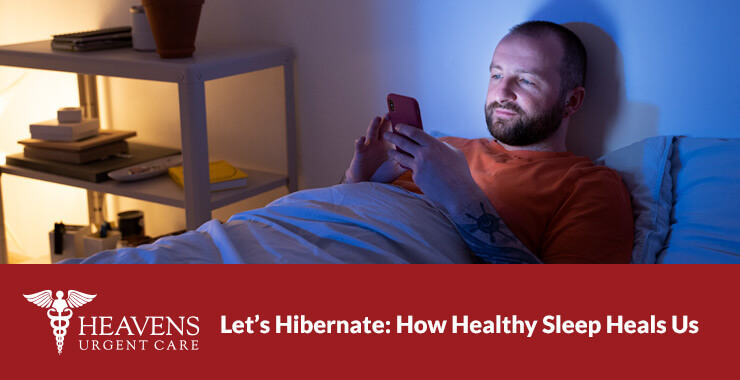
That device keeping you up late at night and the alarm clock bidding you to rise early are detrimental to your health and healing.
This ongoing issue of sleep deprivation is nothing new for Americans.
According to the National Center for Chronic Disease Prevention and Health Promotion, more than 70 million Americans suffer from persistent insomnia or inability to sleep. In a sense, we are a nation of insomniacs, and the problem is not going away—it is getting worse.
Since more sleep is natural in the wintertime, why not take advantage of the shorter days to sleep deeper and for a little longer so that your body can do its amazing job of healing?
In a study published last year in the journal, Frontiers in Neuroscience, researchers in Germany found that people were naturally getting an extra hour of sleep during the winter nights compared to summer nights.

These longer hours in bed also included 30 extra minutes of rapid eye movement (REM) sleep, a stage of deep sleep crucial to forming long-term memories, regulating emotions, and developing and restoring the brain.
A large part of this natural hibernation-like time during the winter, happens because we experience fewer hours of ambient sunlight, which drives our circadian rhythms (biological clock), and the chemicals like melatonin that signal to our body that it’s time to sleep.
Studies have shown that artificial light exposure, like indoor lighting and electronic devices, can disrupt our circadian rhythms by suppressing melatonin and leading to a whole gamut of conditions like depression, obesity, diabetes, and cardiovascular disease.
The Healing Power of Sleep
Medical professionals know that sleep plays a significant role in helping the body heal itself and return to normal function after illness or surgery. Here’s how sleep can help our minds and bodies heal:
- Reduces inflammation by releasing prolactin
- Relieves stress through lower levels of cortisol
- Releases healing hormones
- Increases blood flow to muscles
- Produces proteins for needed cell repair
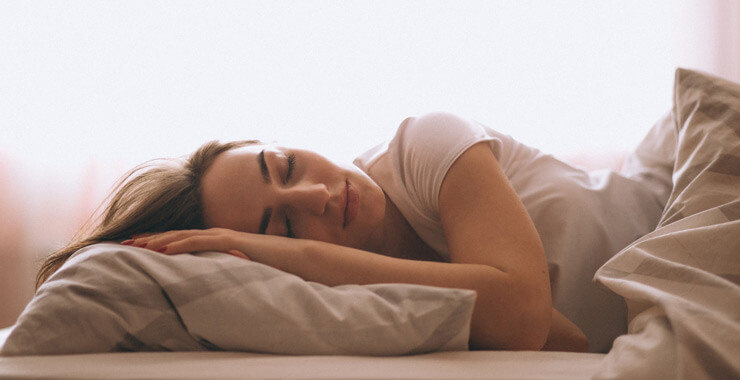
The Architecture of Sleep
It should initially take between 10 and 15 minutes to fall asleep. Most people need about 5 to 6 cycles of sleep daily, each of which lasts about 90 minutes.
While minor interruptions occur between some sleep cycles, we should be able to fall back to sleep quickly. Optimally, sleep can be divided into 2 phases:
- Phase 1: Non-rapid eye movement (or NREM) sleep
- Phase 2: Rapid eye movement (REM) sleep
For some time, it was thought that we dream only in REM sleep, we now know we dream in both NREM and REM sleep. We also know that it is more difficult to recollect dreams that occur in NREM sleep, particularly in its deeper stages. Source: The Phoenix Society for Burn Survivors
10 Winter Sleep Tips
Follow these 10 tips to give your body the best chance for a restful, healing sleep.
- Lowering your skin temperature before going to bed can help you enjoy sounder and less interrupted sleep – keep the thermostat somewhere between 62- and 68-degrees Fahrenheit
- Increase exposure to light – this is especially helpful in the morning
- Use a humidifier or nasal rinse to keep your airway passages from drying out
- Increase or maintain physical activity during the winter
- Avoid binging on entertainment activities before bed, especially those involving screens or electronics
- Don’t have caffeine after lunch and avoid alcohol near bedtime
- Practice rituals that help you relax before bed, such as taking a warm bath, drinking tea, journaling, or meditating
- So sad, but we are going to caution you against taking a nap during the day
- Slow down that sugar consumption and those large meals
- Eating too close to bedtime can trigger gastroesophageal reflux disease (GERD) symptoms, like heartburn and stomach discomfort
Although hibernation-like sleeping patterns can be good for your health and overall well-being, there is a caution: don’t sleep too much.
Some people start ignoring their body’s natural circadian rhythm by staying in bed or laying on the couch throughout the day for too long. Unless you’re sick it’s best to be up and doing.